CrossCraze Pro
- 4.9
- Rating
- 10.00K
- Installs
- $6.99
- Price
 Analysis by App-foxy
I came to CrossCraze Pro looking for a word game I could play without turning a quiet moment into another online commitment. After spending time with it, I found a focused board-game experience built around choosing letters carefully, spotting opportunities, and deciding when a modest move is better than a flashy one. It is not trying to be a social network, a puzzle subscription, or a fast arcade distraction. That narrow purpose is exactly why it works for some players and feels limited for others.
This is a word game from ORT Software, released on March 22, 2013, and its age is noticeable in a useful way: the design feels established rather than overloaded. The current version is 4.06-PRO, it requires Android 6.0 or later, and it carries an Everyone rating. The game costs $6.99, so the main question is not whether it can fill five spare minutes, but whether you want a self-contained word-board experience enough to pay once for it.
What to consider before choosing it
I would use this section to think about the routine you want the game to support, not just whether its first few boards feel enjoyable. A useful test is to picture where it would actually live in your week: as a travel companion, a quiet solo challenge, or something you bring out with one friend. That expectation makes it easier to judge the trade-offs in the next section.
You May Also Like

 Blood Strike: 2.5 Anniversary
Blood Strike’s Loadouts Turn Every Drop Into a Tactical Gamble
A close look at Blood Strike’s custom loadouts: how fast access to signature weapons reshapes its battle royale rhythm, rewards preparation, and narrows the gap between fights.

 Pandora - Music & Podcasts
Pandora’s Music Is Easy to Start, but Harder to Recover
Pandora’s strength is its low-effort path from a seed to a station. Its weak spot is how much confidence it asks you to place in connection, setup, and quiet recovery.

 8 Ball Pool
 Is Built on Rivalries, Rematches, and Routine
A close look at the rivalries, rematches, shared routines, and unanswered safety questions that turn a quick pool match into a persistent mobile community.

 Samsung Music
’s Quiet Strength Is Playing What You Already Own
Its reach comes less from spectacle than from dependable access to a personal library. That simplicity is both the app’s strongest retention engine and its ceiling.

 AccuWeather: Weather Radar
AccuWeather Review: A Quick, Clear Forecast for Everyday Decisions
For everyday plans, the best forecast is the one you can understand quickly. AccuWeather makes rain timing, radar, and local conditions easy to act on, with a few trade-offs.

 Hill Climb Racing
Why Hill Climb Racing Still Turns Crashes Into One More Run
A tiny car, a bumpy hill and one more upgrade: Hill Climb Racing keeps resurfacing because its simple chaos makes every near-miss feel personal.
More From Our News Desk
View All News


The right kind of word-game player
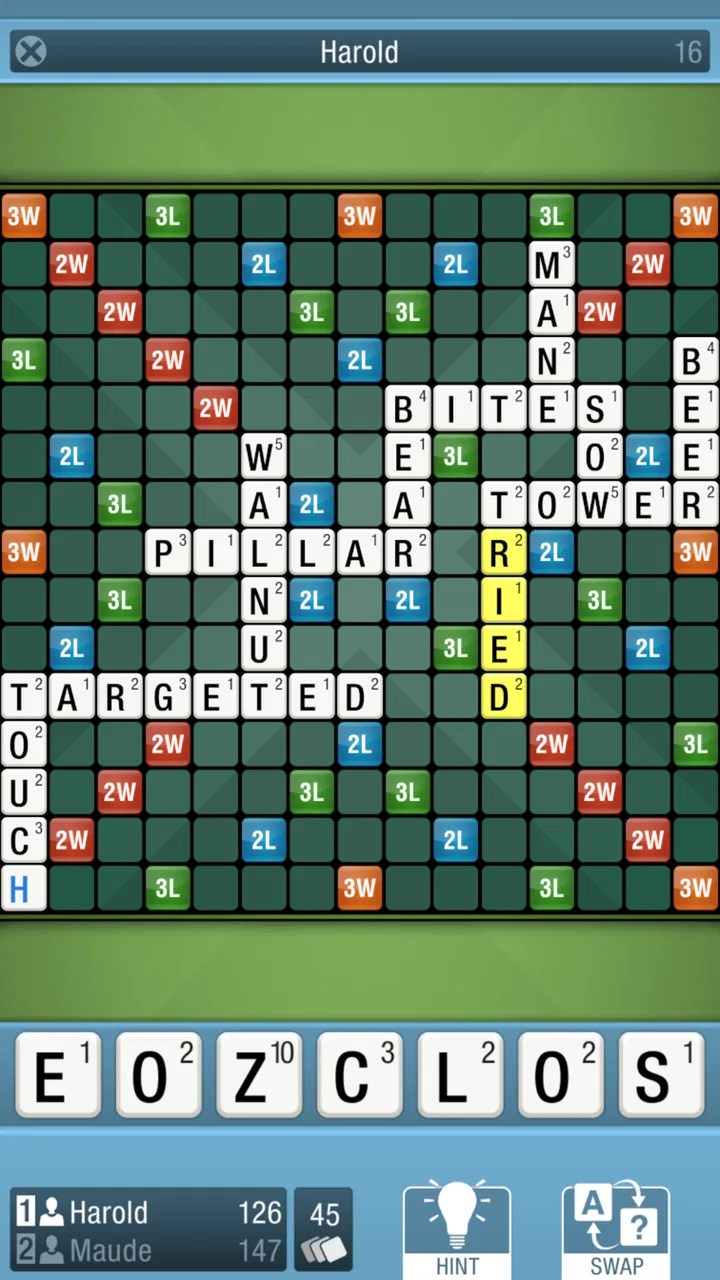
The first decision is whether you enjoy constructing words on a board more than solving isolated clues. CrossCraze Pro is aimed at the player who likes seeing several possibilities at once: a short word that opens a valuable lane, a longer word that blocks a future move, or a letter that becomes much more useful when placed beside an existing combination. I found that the pleasure comes from the position as much as from vocabulary.
That makes it quite different from a daily guessing game. A daily guessing game gives you one compact challenge and a clear stopping point. Here, the board remains part of the problem. You are managing space, letters, and timing together. If you enjoy word strategy, that extra layer is the reason to choose it. If you only want a quick clue with a single answer, the board may feel like unnecessary work.
The appeal is also practical. The game can be played offline, either alone or with a friend, so it suits travel, waiting rooms, flights, and places where a dependable connection is inconvenient. I especially liked that the offline focus changes the mood. I could start a game without checking messages, waiting for another player, or feeling that I needed to respond immediately.
Why the offline format matters
Offline play is more than a convenience here. It makes the game useful in situations where a live multiplayer title would be awkward. Imagine sitting with a friend at a café after dinner, passing the phone back and forth while talking. You can play at your own pace instead of treating every turn as a timed event. The same format works when you are alone and want a quiet mental exercise rather than a feed of challenges.
There is a trade-off, though. Players who enjoy a large online community, public rankings, chat, or a constant stream of opponents may find the experience too contained. I would not choose this as my main word game if the social competition were the central reason I played. Its strength is independence, not a busy network.
How the board rewards patience
My most useful adjustment was to stop treating every turn as a hunt for the longest possible word. A shorter placement can be stronger when it creates several future connections or keeps a useful part of the board open. This is one of the less obvious reasons the game holds attention: vocabulary helps, but board judgment often decides whether a move is genuinely good.
I also learned to examine the empty spaces around a promising placement before committing. A word that looks attractive in isolation can make the next turn awkward by sealing off a productive area. Conversely, an ordinary-looking word can give you more ways to use difficult letters later. That makes each turn feel like a small planning exercise rather than a simple vocabulary test.
Playing alone without making it feel like homework
Solo play is the most important test for me because it determines whether the game remains useful when nobody else is available. CrossCraze Pro works best in short sessions where I set myself a modest goal: build a better opening, avoid wasting flexible letters, or find a way to recover from a cramped board. Those personal targets keep a quiet game from becoming repetitive.
It is also a good fit for players who like thinking time. I never felt pushed to make a move merely because the game wanted constant activity. That slower rhythm lets me consider several placements, but it also means the experience will not satisfy someone who wants rapid rounds and immediate stimulation. The game asks for attention, even when the session is relaxed.
Playing with a friend in the same room
The two-player option gives the game a different character. With a friend, the board becomes a shared object, and the pauses between turns are part of the experience. It is easy to imagine using it during a family visit or a long journey, especially when both players prefer a calm contest to a noisy party game.
There is a small social cost to passing a device around: it is less convenient than a physical board if several people want to watch every move, and it may not be ideal for a group. For two people, however, the compact format is sensible. I would treat it as a digital substitute for carrying a word board, not as a replacement for a full tabletop gathering.
What the purchase changes
The $6.99 price places this in the category of a paid game rather than a casual free download. That matters because the value depends on repetition. If I play it regularly during commutes or keep returning to it for solo sessions, paying once feels easier to justify than dealing with a free game that constantly asks for attention in other ways. If I only play word games once every few months, the purchase is harder to defend.
The game has an average rating of 4.9 from around 1.7 thousand ratings, and it has passed ten thousand installs. Those figures suggest that its focused approach connects strongly with the people who choose it, but they should not be read as proof that it suits every word-game fan. A smaller, dedicated audience can be a better sign for a niche offline title than broad popularity, yet the decision still comes down to your preferred style.
Where this game wins and where another option fits better
I find the clearest comparison is about the kind of attention each format asks from you: this game rewards patient board planning, while daily puzzles, online matches, and physical boards serve different moods and settings. Before choosing, I would ask whether offline independence is a lasting benefit for me or merely a novelty. The distinction helps show where this game is worth keeping and where another option makes more sense.
Its strongest advantage is control
CrossCraze Pro wins when I want control over the pace and setting. I can play alone, play with a friend, or stop after a single turn without feeling that I have abandoned a live match. That flexibility is more meaningful than it sounds. Many modern word games are built around daily retention or ongoing interaction; this one is easier to pick up because it does not demand a particular schedule.
The offline design also makes it dependable as a travel game. I would choose it over a connection-dependent alternative for a long journey, especially if I wanted something more thoughtful than a collection of tiny puzzles. The board gives a session enough depth to continue after the initial novelty disappears.
It favors deliberate word strategy
Another strength is the way it combines language knowledge with placement decisions. Knowing an unusual word can help, but it does not automatically solve the position. You still need to decide whether using a valuable letter now is worth the board shape it creates. That balance gives experienced word players something to think about while leaving room for a less advanced player to improve through practice.
One tip I would give a new player is to review the whole board before searching for words. Start with the open lanes and the letters already in play, then consider your rack or available choices. This reverses the instinct to find a word first and force it onto the board. In my sessions, that simple habit produced more sensible moves and reduced the number of turns spent chasing an attractive but unhelpful idea.
Where a daily puzzle is the better choice
A daily puzzle is better if you want a compact ritual with a fresh challenge and a clear result. That format is easier to share casually and often requires less sustained planning. I would recommend it to someone who wants a small mental break during a lunch pause, not a board that can develop over a longer session.
The trade-off is depth. A daily guessing format usually does not ask you to manage several possible scoring routes or think about how one move changes the next. CrossCraze Pro is the better choice when you want the board itself to remain interesting. The daily format wins when simplicity and a firm time limit matter more.
Where online word battles are the better choice
An online word battle is a stronger fit for players who need competition against a wide range of opponents. If your motivation comes from comparing results, answering quickly, or maintaining an ongoing rivalry, an offline game may feel quiet by comparison. CrossCraze Pro gives you independence, but independence also means giving up the energy that comes from a large active community.
I would also steer highly social players toward an online alternative if they want conversation around each match. This game is about the move, not the surrounding network. That is not a flaw in the design; it is a clear boundary. The mistake would be buying it while expecting a social platform and then blaming it for being a focused board game.
Where a physical board still has an edge
A physical word board remains better for a group sitting around a table. It is easier for several people to see at once, and the tactile act of handling tiles has its own charm. CrossCraze Pro wins on portability and convenience, particularly when one or two people want to play without packing a box of pieces.
For a pair of travelers, I would prefer the app. For a family game night with several spectators, I would probably choose the physical version. That distinction helped me understand the product’s place: it is a compact personal game, not a universal replacement for every word-game format.
The cost of switching from another word game
Moving from a fast, online word game to this one requires a change in expectations. You may initially miss instant turns, visible opponents, or the feeling that something new is always waiting. The benefit is that your attention becomes your own again. You can pause, reconsider, and return later without the game losing its purpose.
Moving from a daily guessing game requires a different adjustment. Instead of asking, “What is the answer?” you start asking, “Which move gives me the best position?” That is a more demanding question, but it is also why the game can remain engaging after the first few sessions. The learning curve is not mainly about memorizing obscure vocabulary; it is about seeing relationships across the board.
Moving from a physical board is the easiest transition in terms of basic concept, but the screen changes how you interact with the game. The app is lighter to carry and faster to set up, while the physical version may feel more satisfying for a shared occasion. I would make the switch for convenience, not because the digital format improves every part of the experience.
Small habits that improve the experience
I recommend using solo games as practice rather than judging them only by whether you win. Try opening with restraint, then observe which areas of the board become useful. In another session, prioritize keeping multiple options available. These experiments reveal more than repeatedly chasing the highest-looking move.
When playing with a friend, agree on the pace before starting. A relaxed game benefits from discussing possibilities after a turn, while a competitive game is more enjoyable when both players understand that the board should speak for itself. This is a simple but important use case: the same app can support a quiet conversation or a serious contest, depending on the rules you set between yourselves.
Another practical tip is to reserve it for moments when you can give the board a little attention. It is easy to open a word game automatically, but this one rewards looking carefully. If you are distracted, you may miss a useful connection and come away thinking the game is dull when the real problem was the setting. A short, focused session is better than a long one played half-heartedly.
Who should skip it
I would skip this purchase if you want a free, constantly refreshed word service, a large online opponent pool, or a game built around quick reactions. I would also hesitate if you dislike paying for a narrowly focused title. The price is reasonable only when the offline board format matches how you actually play.
Players who find traditional word-board games frustrating may not be rescued by the digital format. The screen removes setup and storage, but it does not remove the need to think about letters and placement. Likewise, someone looking for a broad collection of unrelated mini-games should choose a different type of app rather than expecting this one to provide variety outside its central idea.
My recommendation
I recommend CrossCraze Pro to anyone who wants a calm, offline word game with enough board strategy to reward repeated play. Its best audience is a solo player who values independence or two friends who want a portable, turn-based contest. The Everyone rating makes it approachable in terms of audience, but the thinking required means it is still most enjoyable for people who like language puzzles with consequences.
ORT Software has kept the focus narrow, and that focus is the product’s main advantage. It does not need a busy social layer to be useful, because the board itself supplies the challenge. At the same time, that narrowness means it cannot replace a daily puzzle, an online league, or a group tabletop game for every player.
For me, the deciding point is the combination of offline access and meaningful placement choices. I would pay $6.99 for it if I expected to use it as a regular travel companion or a quiet evening game. I would pass if my priority were constant novelty or social competition. Choose it for thoughtful word-board play, not for the features surrounding the board.
With a 4.06-PRO version, Android 6.0 minimum requirement, and a long-running presence since 2013, it feels like a settled choice rather than a game chasing every new trend. That will appeal to some readers and disappoint others. My final view is straightforward: if you want a self-contained word game that lets you play offline, alone or with a friend, this is a strong recommendation; if you want a connected service or a rapid daily habit, another category will fit you better.
FAQs for CrossCraze Pro
01What is CrossCraze Pro, and how is it different from traditional word games?
CrossCraze Pro is a premium crossword-style word game that combines familiar board-game mechanics with several alternative rule sets. Instead of simply copying a standard word game, it lets you play with different board layouts, scoring systems, and gameplay variations. It is designed for players who enjoy vocabulary challenges, strategic tile placement, and relaxed offline matches rather than fast-paced action.
02Can I play CrossCraze Pro without an internet connection?
Yes, one of the main advantages of CrossCraze Pro is that it supports offline play. You can start matches against the computer without needing a constant internet connection, which makes it useful for travel, commuting, or playing in areas with poor reception. Online features, if available on your device version, may require an internet connection and can depend on platform support.
03Does CrossCraze Pro include different difficulty levels and computer opponents?
CrossCraze Pro includes computer-controlled opponents intended for different levels of experience. Beginners can start with easier challenges while more advanced players can select stronger opponents for a tougher match. The computer players may not feel identical to competing against a real person, but they provide a convenient way to practice vocabulary, learn the scoring system, and enjoy a complete game whenever another player is unavailable.
04What customization and game modes are available in CrossCraze Pro?
The game offers more variety than a single classic crossword mode. Depending on the selected rules, you can play on different board designs, use alternative scoring approaches, and choose variations that change how words are created or rewarded. These options give the game additional replay value and allow players to choose a more traditional experience or a ruleset that feels fresh and strategically different.
05Is CrossCraze Pro suitable for children and casual players?
CrossCraze Pro can be suitable for families, students, and casual players who enjoy spelling and vocabulary games, although the experience is primarily focused on thoughtful word play rather than colorful entertainment. Its turn-based format makes it easy to play at a comfortable pace, and the difficulty options help new players learn gradually. Parents should still review the available dictionary and any online functions before allowing younger children to use the app.
Pros
- Works offline
- making it convenient for travel or areas with limited internet.
- Multiple board layouts and rule options add variety to each match.
- Adjustable AI difficulty suits both casual players and experienced word gamers.
- Clean interface makes menus and gameplay easy to understand.
- No advertisements interrupt matches in the Pro version.
Cons
- The word dictionary may reject valid regional or uncommon words.
- AI opponents can feel predictable after extended play.
- Limited online multiplayer options compared with dedicated word-game platforms.
- The interface looks dated on some newer phones and tablets.
- Advanced customization options may take time to learn.

CrossCraze Pro
Gallery